
The point of the game
Under the sink, in the shed, in the stockroom: bottles with a red-and-white diamond on them are everywhere. SDS Hunter makes you aware of those hazards — not with a warning, but with a round of cards.
What the game is for
The game exists to teach people to recognise the nine GHS hazard pictograms, so that they notice those symbols on the packaging around them. Hazardous substances have, after all, become utterly ordinary. Bleach, drain cleaner, methylated spirits, lamp oil, aerosols, batteries — they sit among the shopping as if nothing were the matter. Every package states exactly what can go wrong, but most people only read it once it has gone wrong. This game reverses that order: you get to know the symbols on an evening when nothing is at stake, so that you recognise them when something is.
Aware of what is standing around you
You become aware of the hazardous substances in your own surroundings, without a wagging finger. You play with cards drawn from everyday life — the kitchen, the shed, the garage, the workshop — and notice along the way how much of that stuff carries a warning you had never read.
All nine symbols, through play
You match on the pictogram and say out loud what you see. After a few rounds you know the nine diamonds without anyone having had to explain them — faster than any toolbox talk or briefing manages.
Hunting the SDS card
You win by collecting safety data sheets. So the document that keeps hazards manageable in real life becomes the most valuable thing on the table.
Matching runs on pictograms
No numbers, no colours — you play on the hazard symbol itself. That is what makes the game work in any language, and what makes the symbols stick.




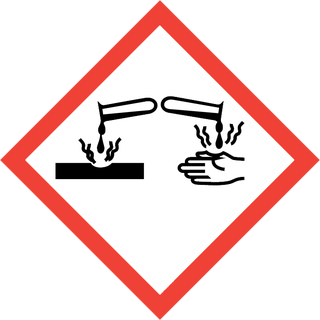
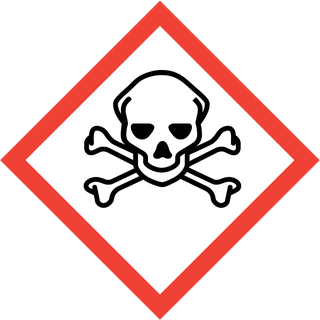

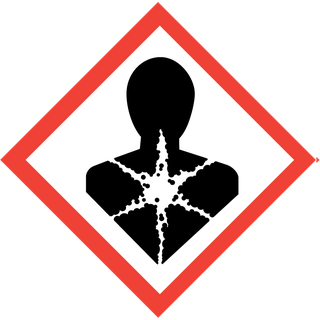
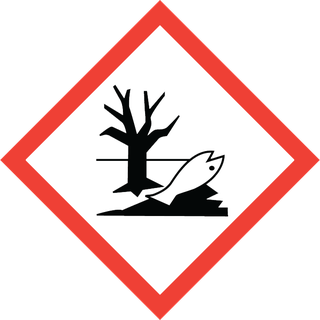
The SDS card: what you are hunting
What you hunt is the SDS card: the most valuable card in the game. A safety data sheet — SDS for short — is the document that belongs with a hazardous substance. It holds everything: which hazards it carries, how to protect yourself, and what to do about a puddle on the floor, splashes in your eyes or a fire. In the game it is the loot. You never play SDS cards; you set them down face up beside you. Whoever has the most at the end has the hazards under control — and wins.
At work, an SDS belongs with the substances being handled. At home you will rarely see one; there the label on the package is your information — the same diamonds, the same warnings. That is where recognising it starts.
How scoring works
Two cards in the game do nothing but explain how you settle up. They sit loose in the box and may stay on the table all game. Here they are at full size, so you can read along.
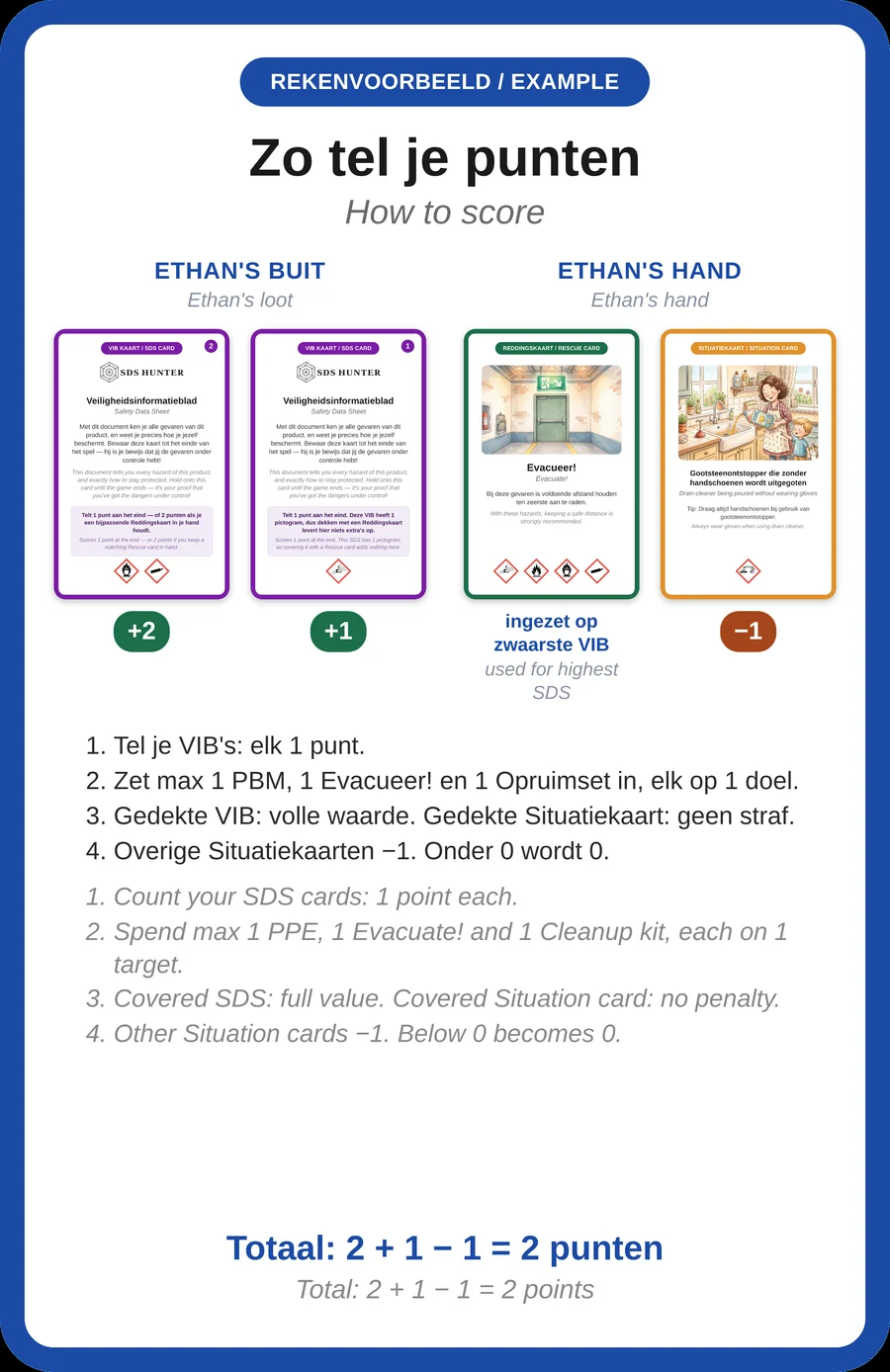
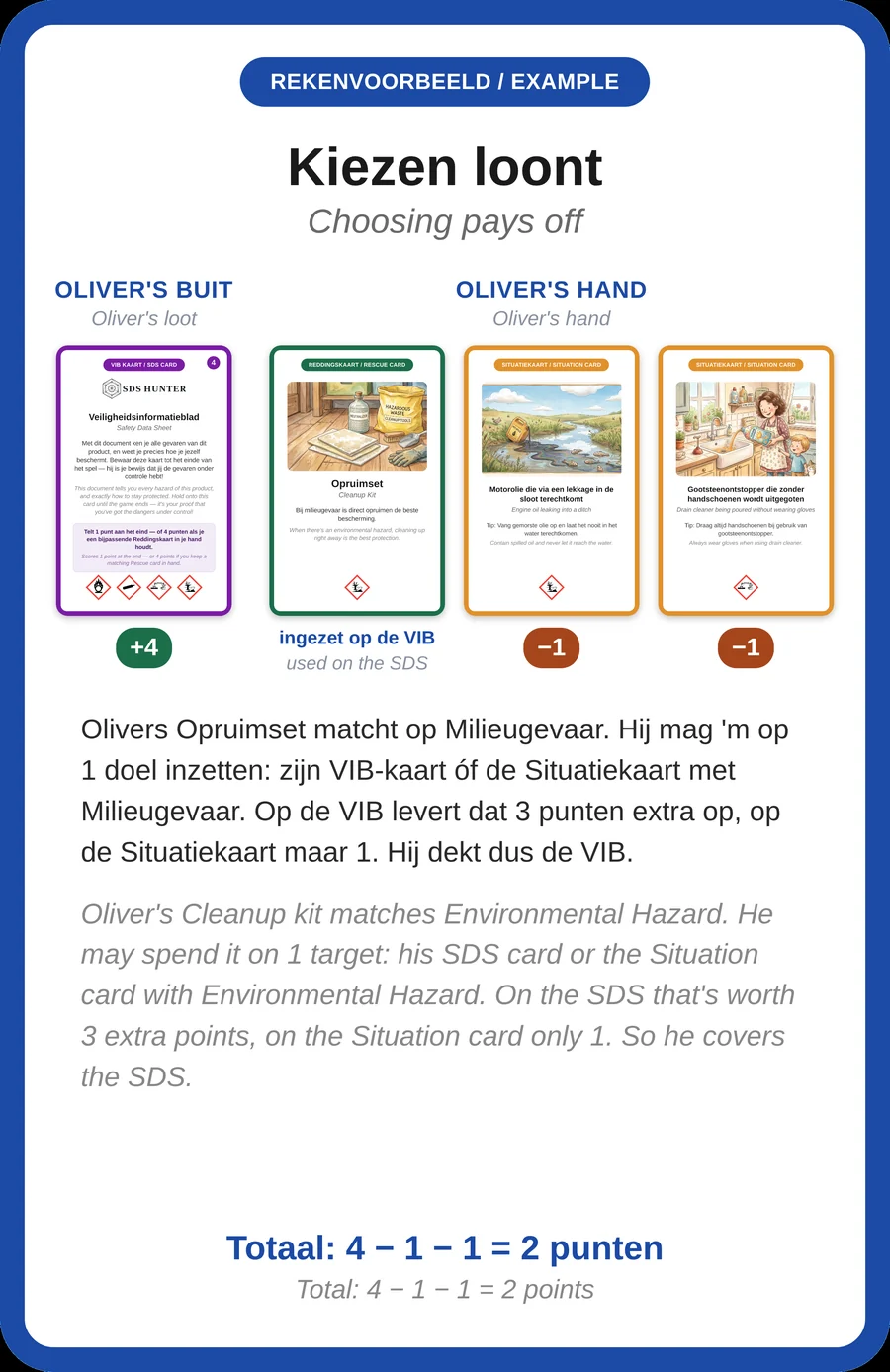
The rules were sharpened over a long series of revision rounds and stress-tested with hundreds of thousands of simulated games across five different simulation systems. How that went is under The story.
Your own edition for your organisation?
Your logo on every card, situations from your own sector, your own box. Request a proposal, no obligations.